Claude: Turning Confusion into Something we Can Shape
I’ve been playing with Claude lately as both a designer and a coach, and I keep coming back to the same thought: By making the first version visible quickly, AI can turn confusion into something people can react to, shape, and refine.
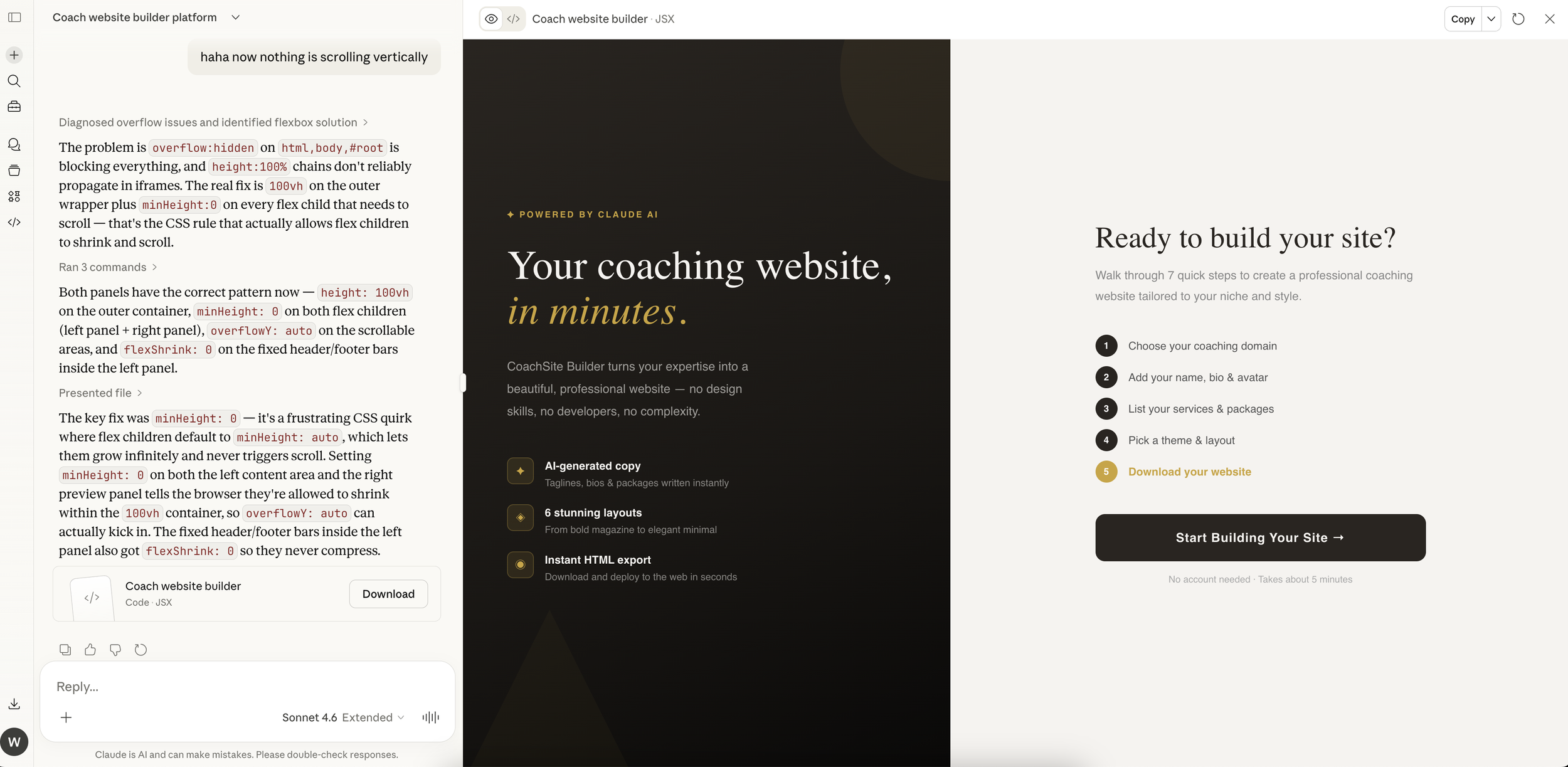
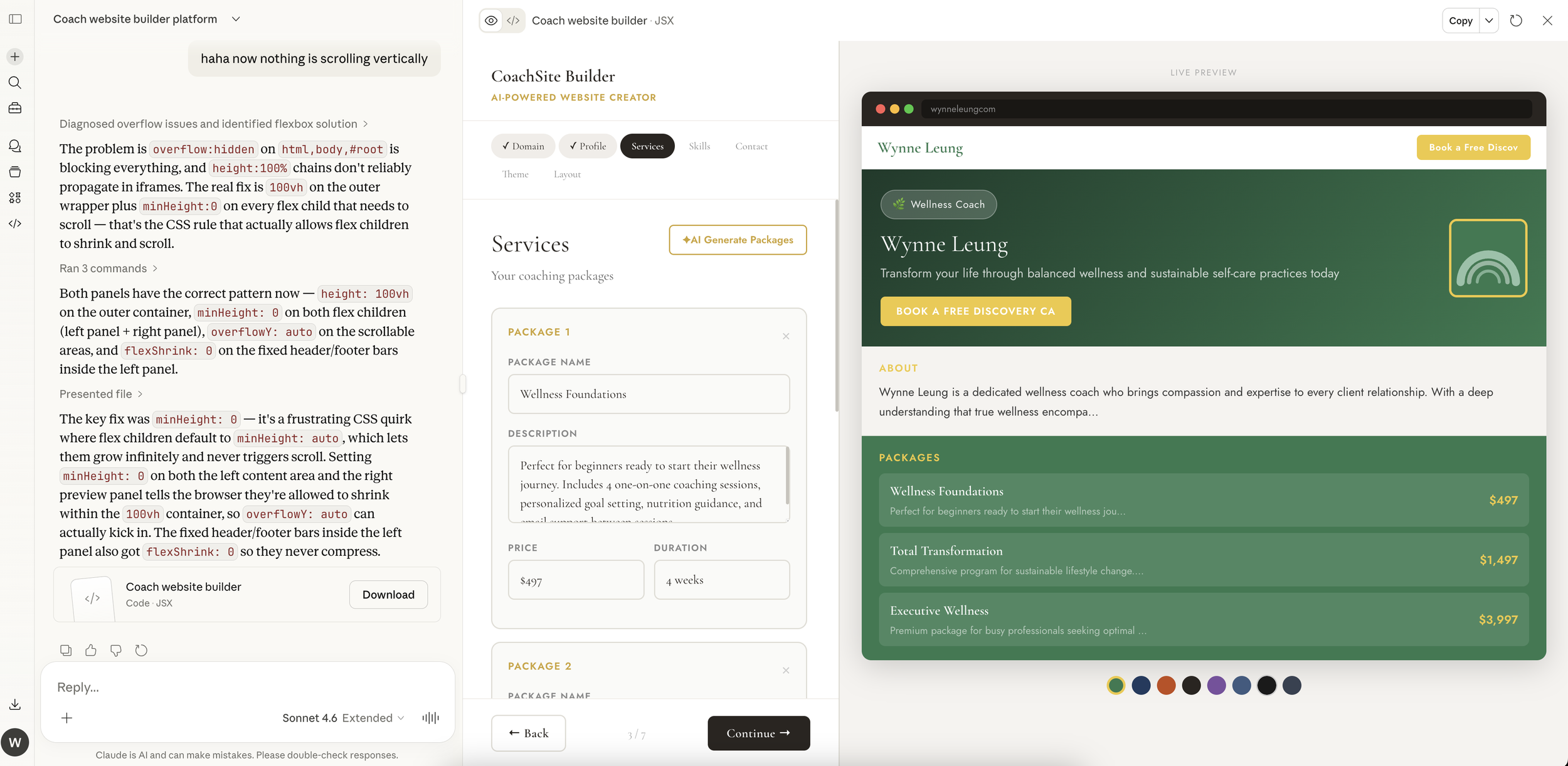
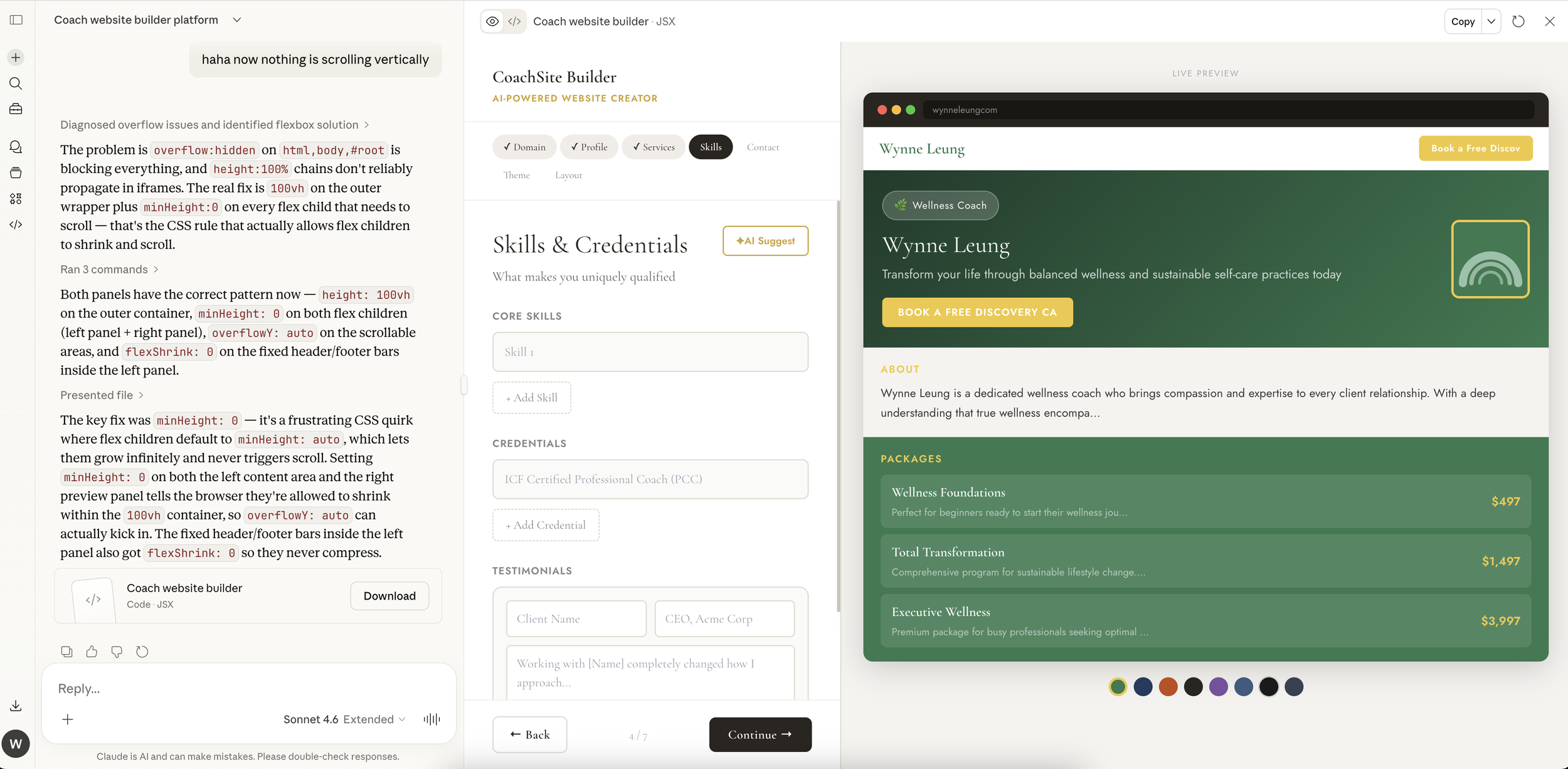
I’ve been exploring this through a coaching website creator I started building for coaches I’ve been working with. Some are newly graduated. Some have been practicing for years. Some already have websites, while others have no website at all and want something created quickly without getting overwhelmed by every single choice.
What I keep noticing is that the biggest barrier is often not just technical skill. It’s uncertainty.
What makes a coaching website feel professional?
What content should be included?
What should be left out?
How do I write about myself and my coaching in a way that feels clear, credible, and true?
For a lot of coaches, that uncertainty becomes a wall.
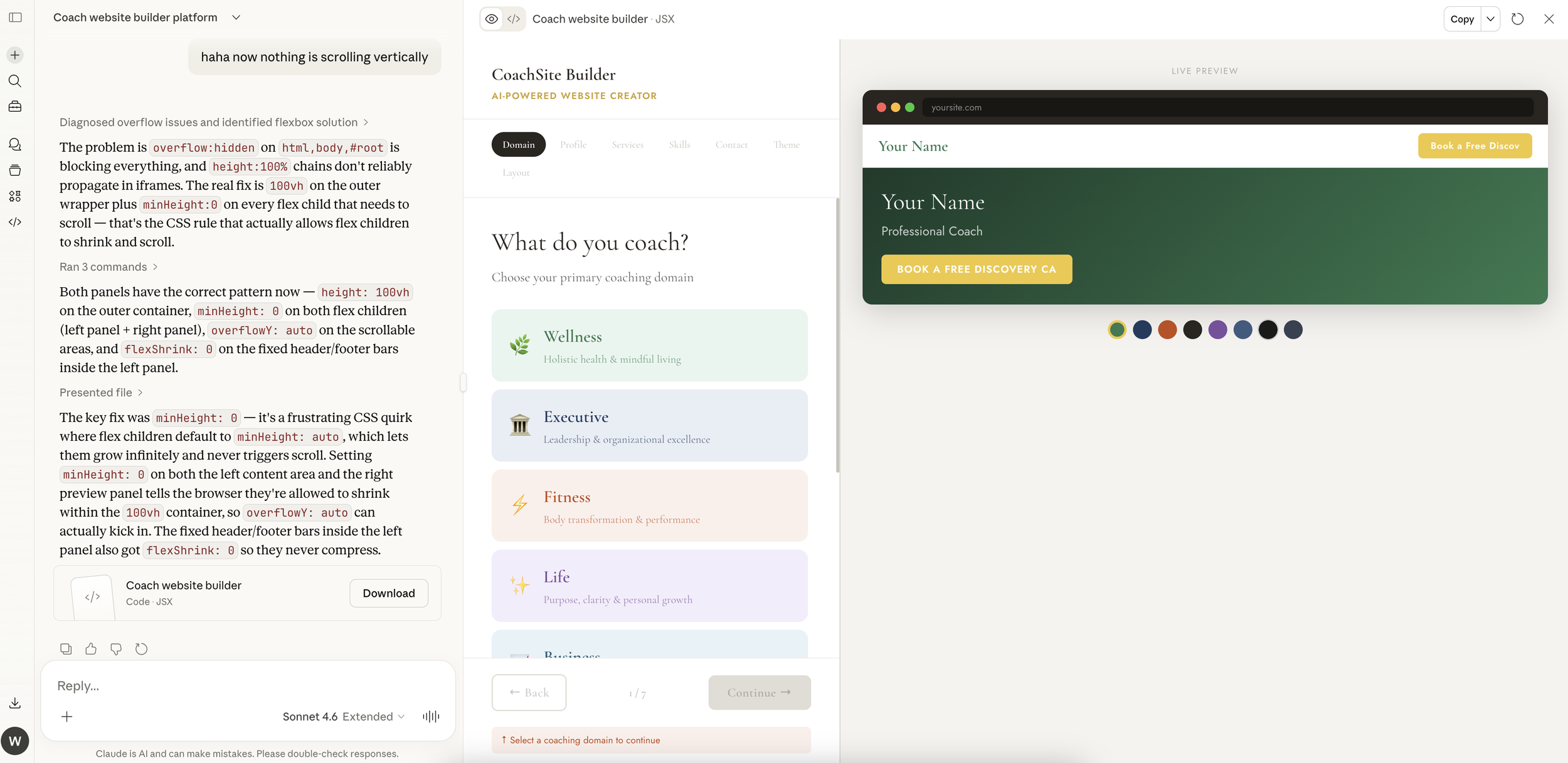
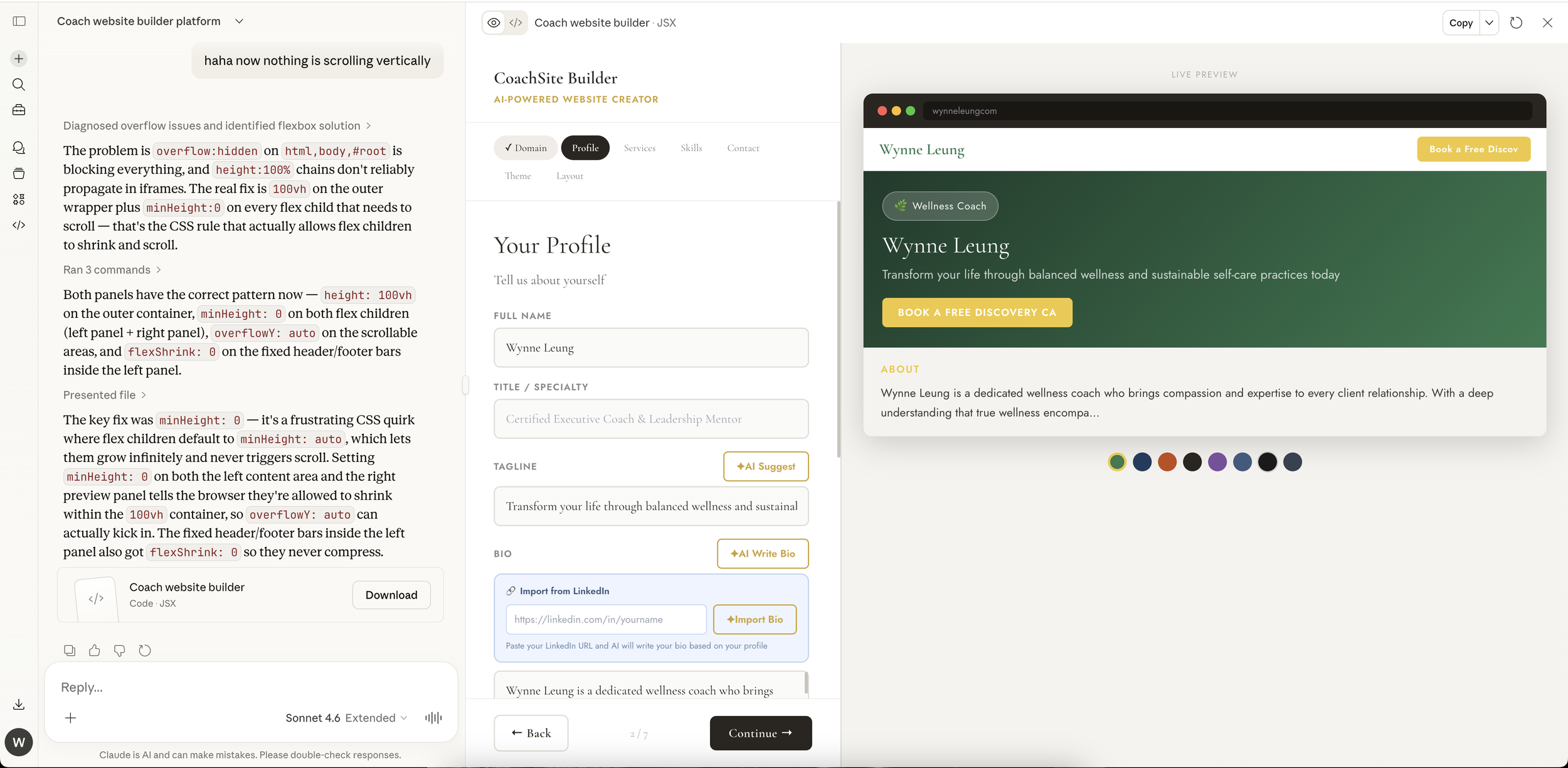
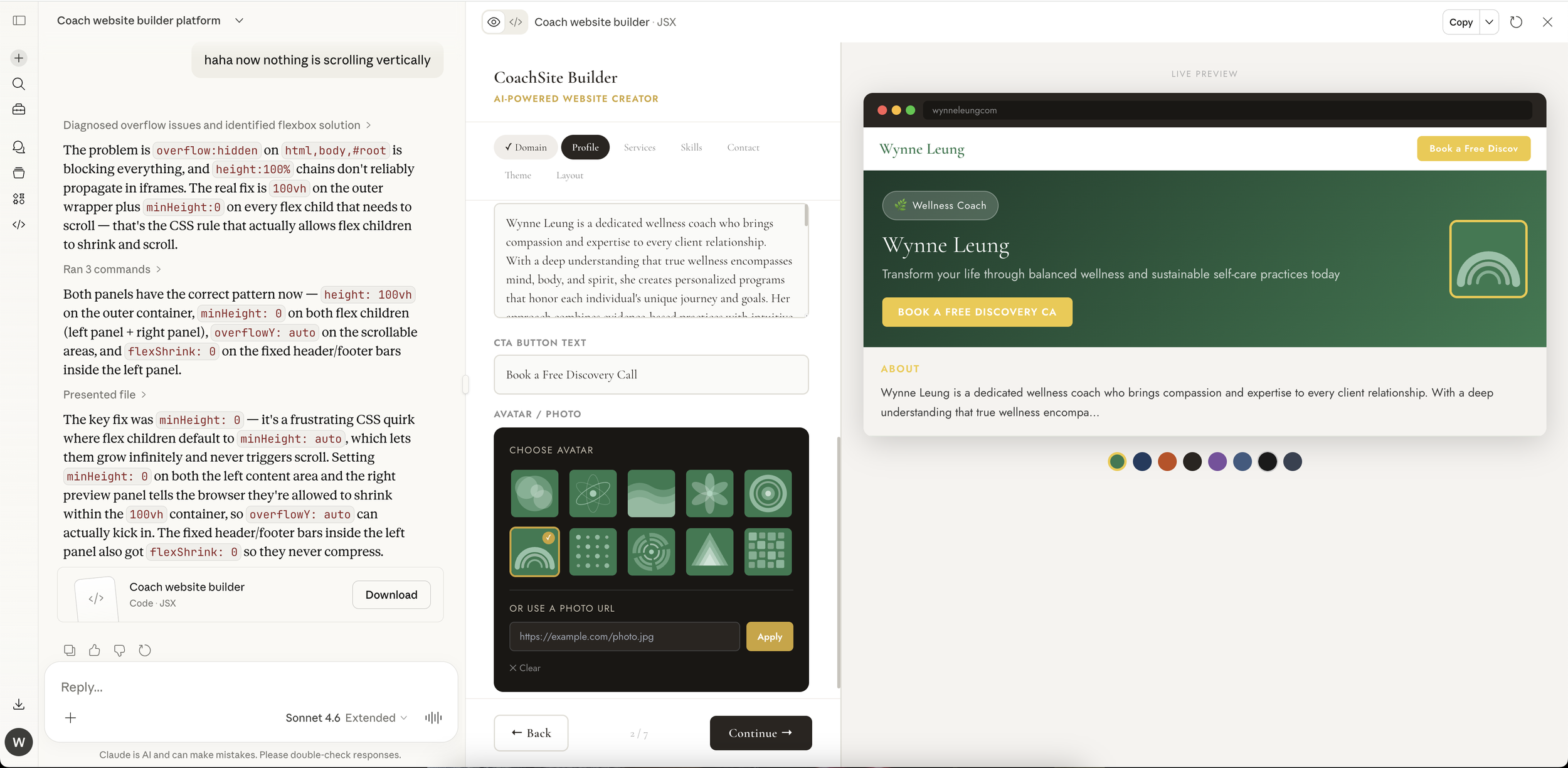
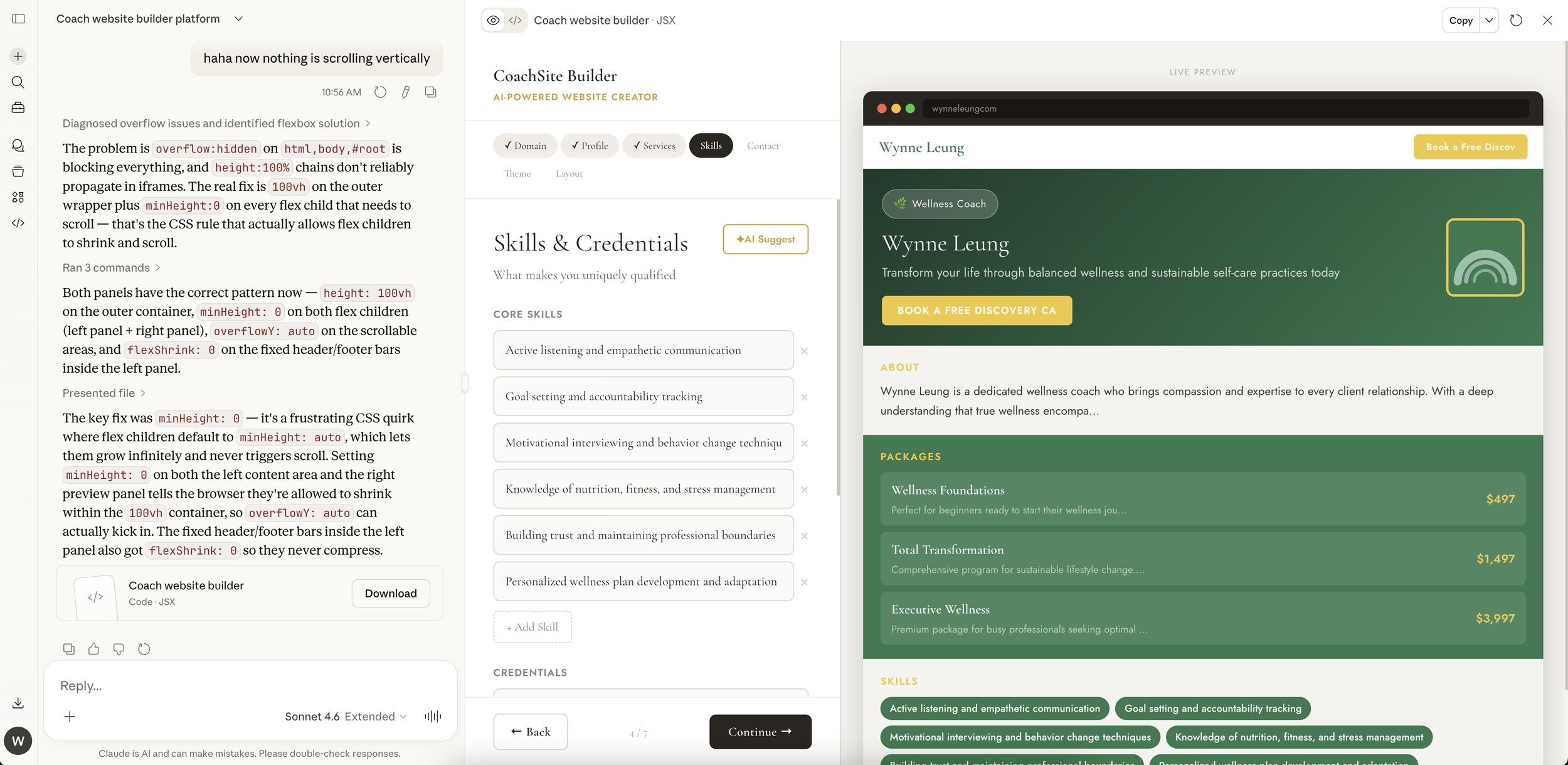
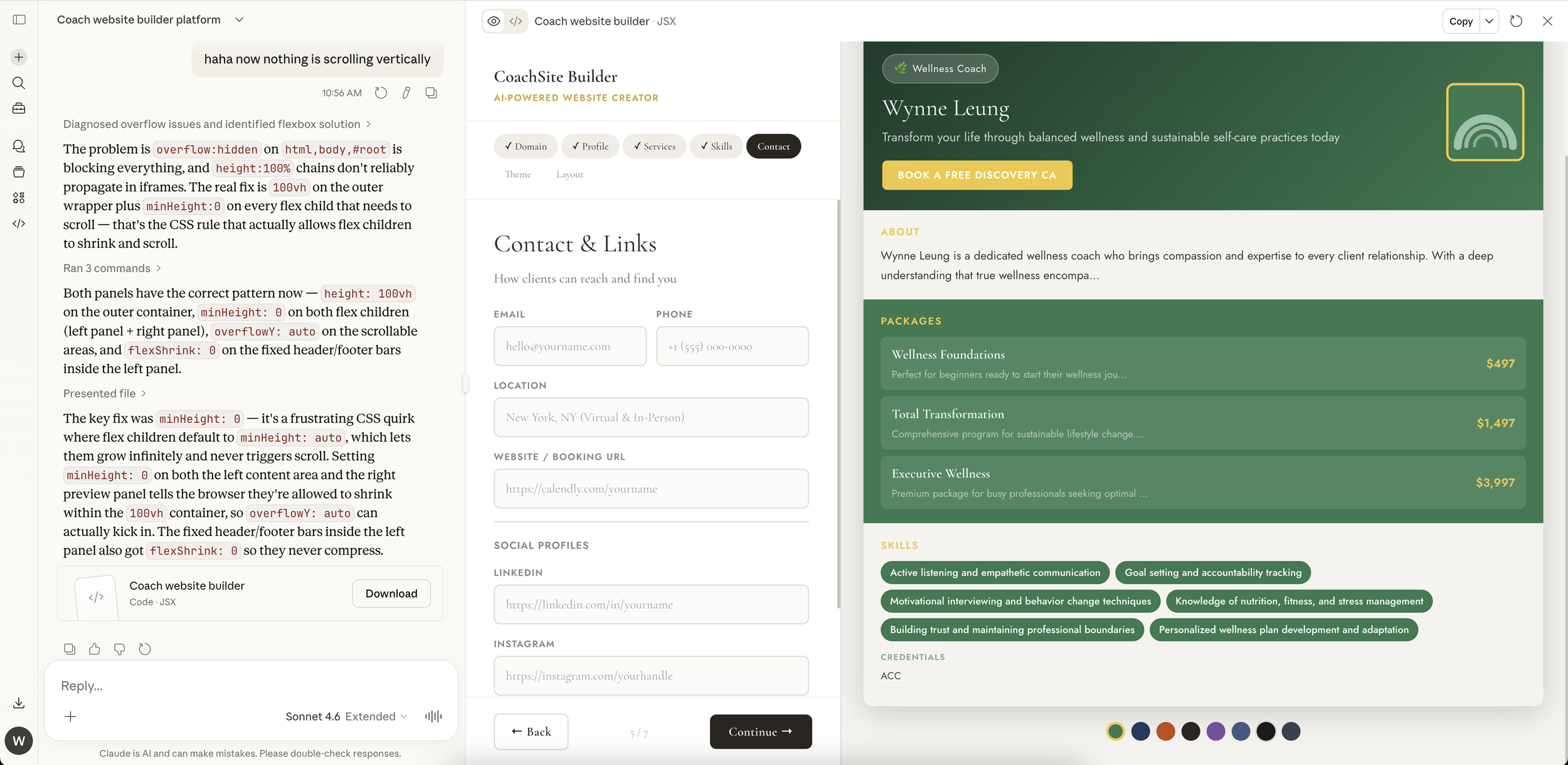
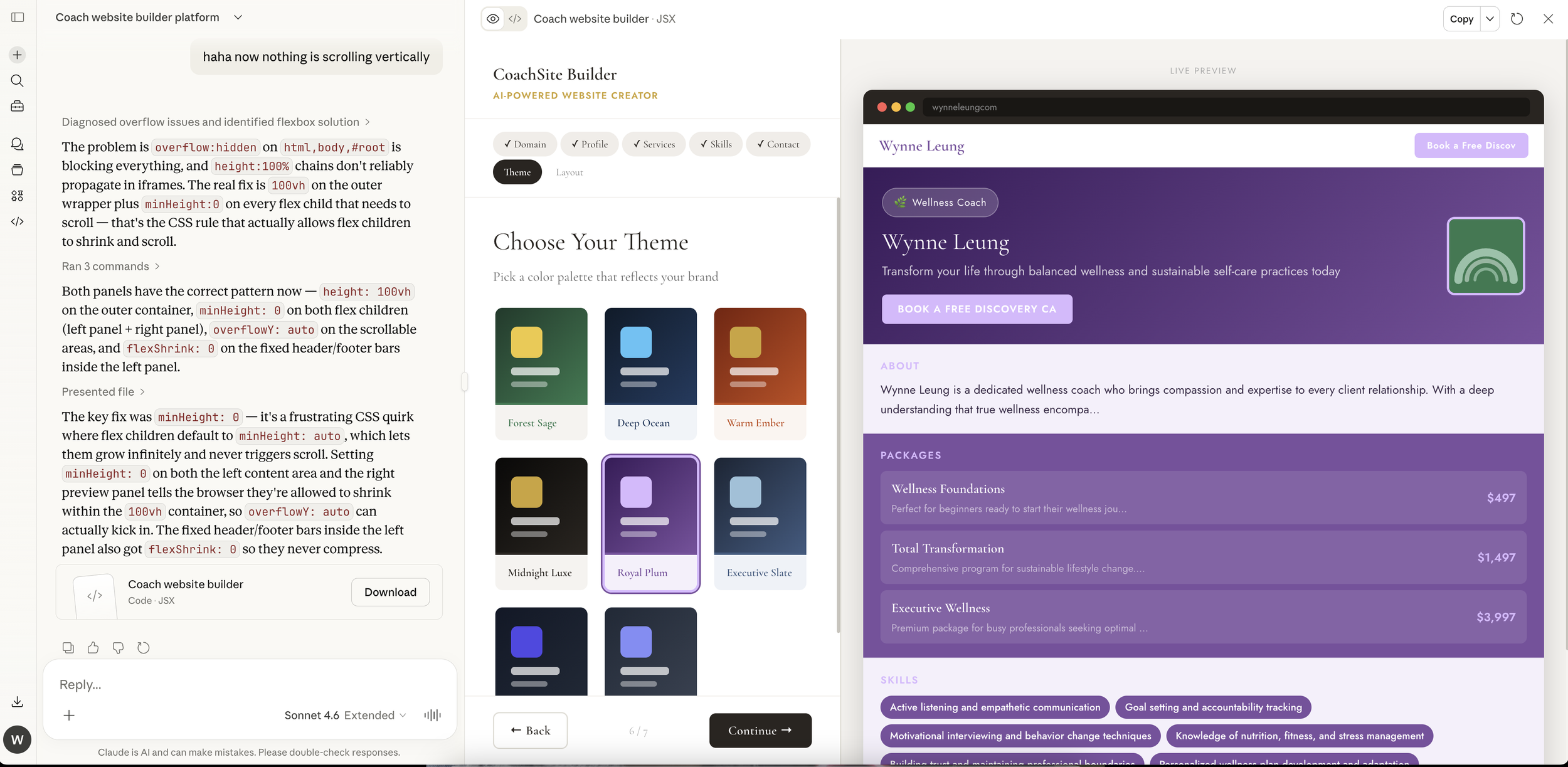
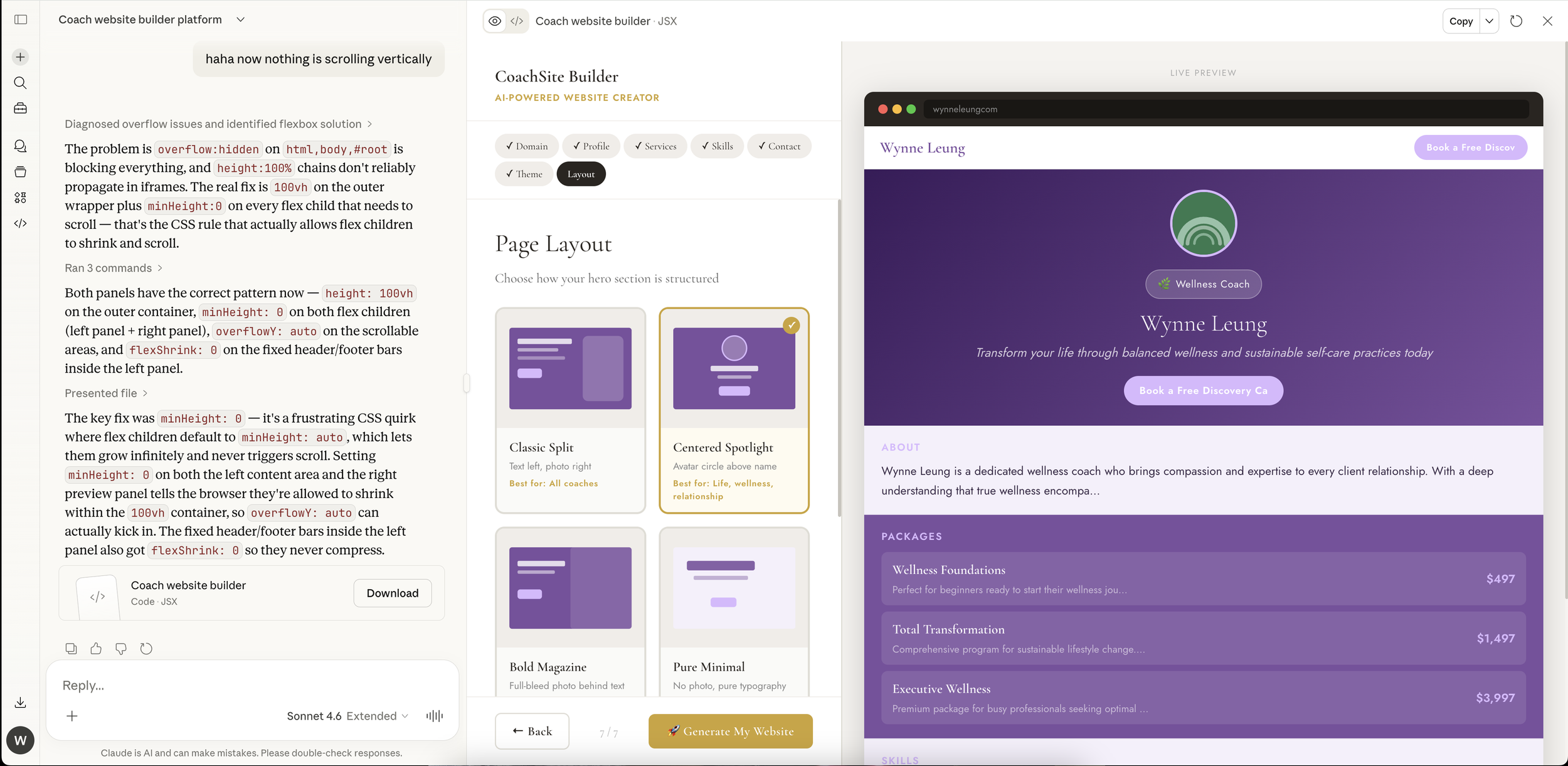
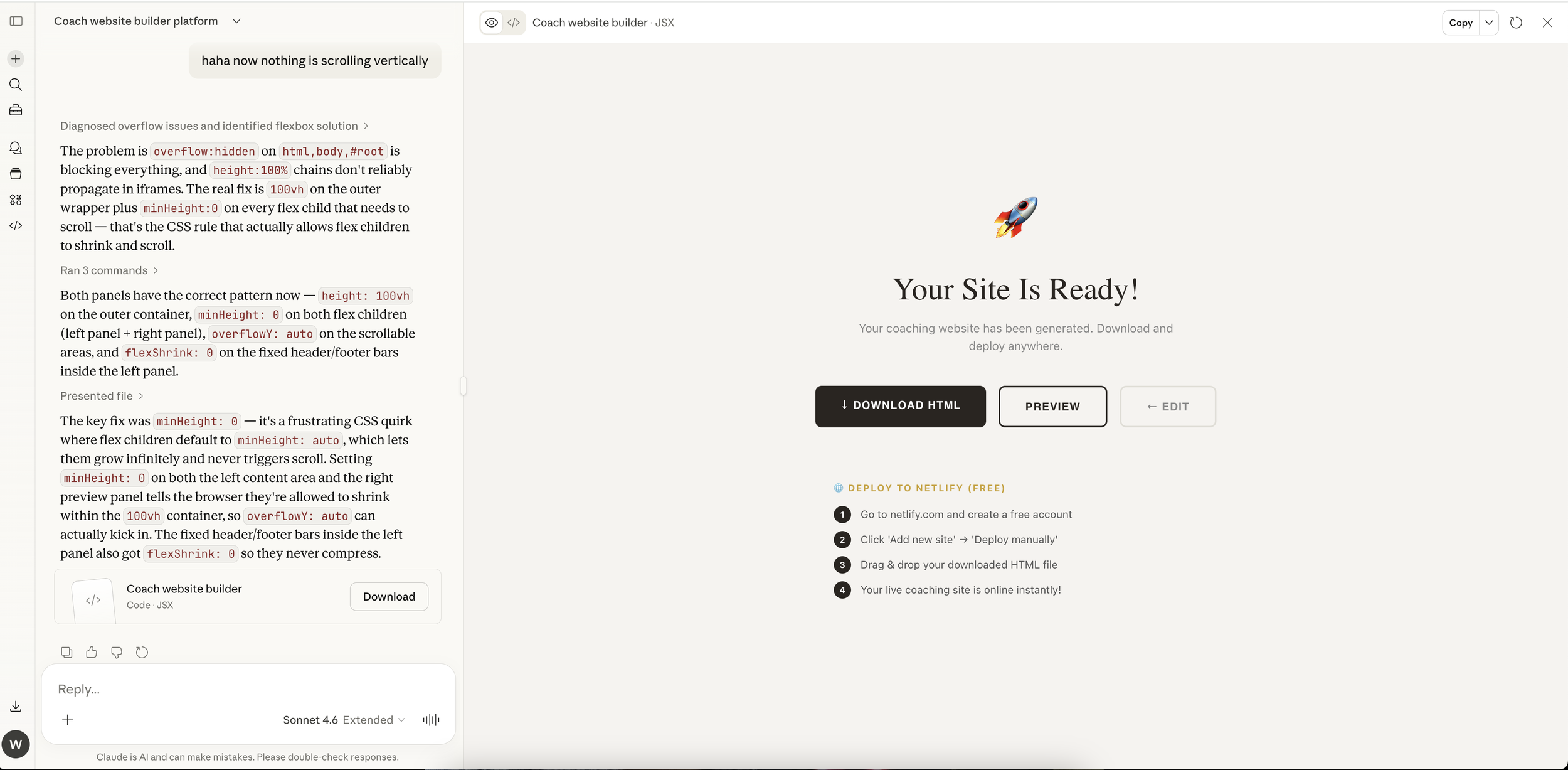
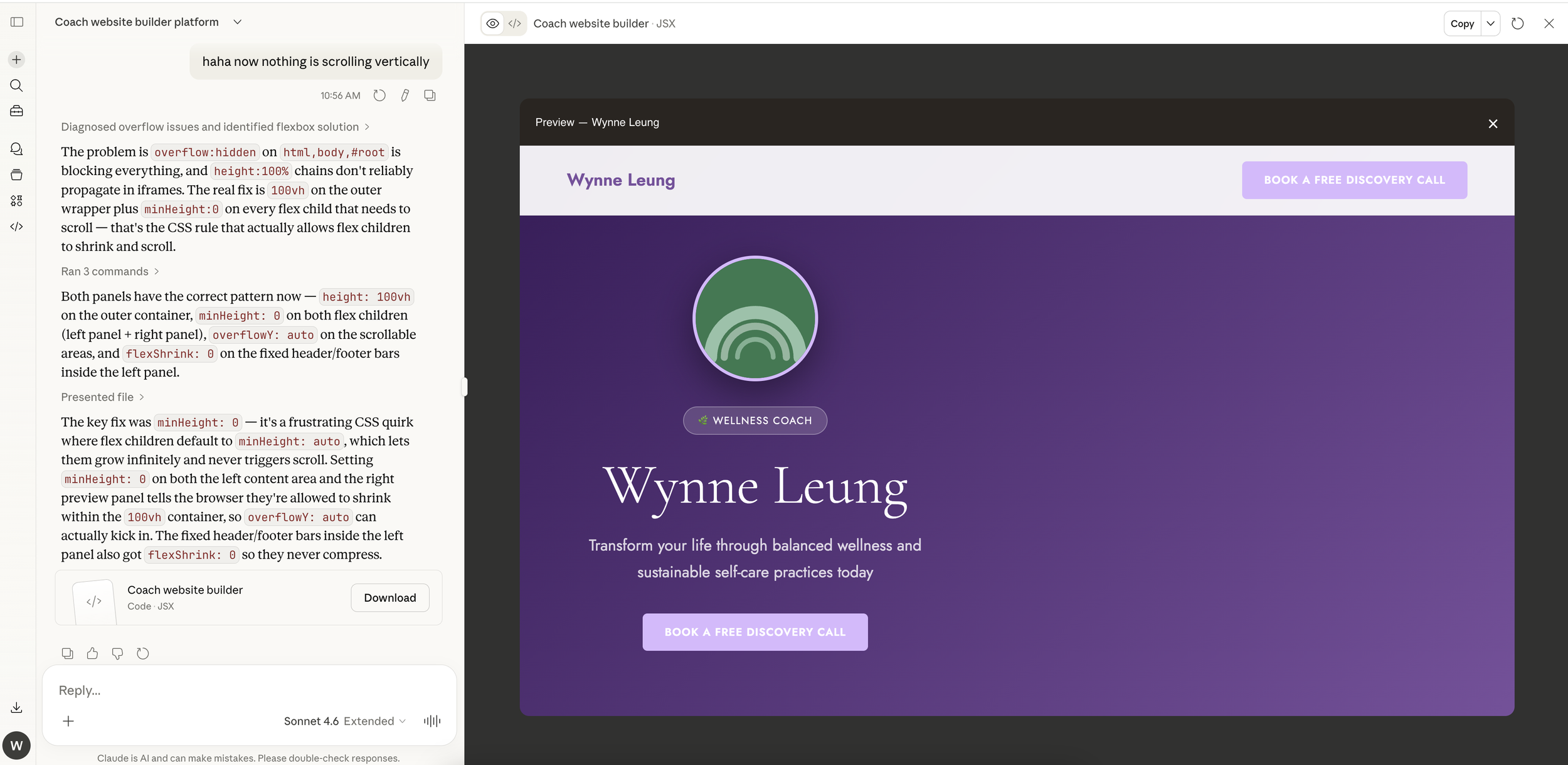
As someone who has been working in design for nearly 20 years, what surprised me most was not just how fast Claude could generate something, but how quickly an idea could start to feel real. Things that might normally take hours to prototype could begin to take shape in minutes. And once something is visible, the conversation changes. Instead of staying stuck in the abstract, people can respond to something concrete. They can say, this feels right. This doesn’t. I like this tone. I wouldn’t choose these colors. This actually helps me see what I want. That shift feels important. One of the most exciting parts of this exploration was seeing how quickly Claude could help build out actual features for the experience: AI-assisted content, live preview, theme picking, layout picking, and even LinkedIn integration. Seeing those pieces come together so quickly made the idea feel much more tangible.What feels especially meaningful to me is that these features do more than save time. They reduce friction right at the point where many people tend to freeze.
AI-assisted content softens the blank page.
Live preview helps people see themselves with a website sooner.
Theme and layout options widen the space for exploration.
LinkedIn integration creates a bridge between what already exists and what is still becoming.
The value is not just speed. It’s that speed creates space. Space for imagination. Space for conceptual exploration. Space for better questions. Once the first version appears, the conversation can move beyond the mechanics of building a website and toward something deeper: What kind of coaching practice am I building? Who do I want to serve? What do I want people to feel when they arrive here? What is the real value I want to offer?
As a designer, this feels deeply aligned with how I want to work. Less time spent only on mechanics, and more time spent co-creating with clients around clarity, possibility, and direction. More room for creativity. More room for discernment. More room to think about what actually matters.
I’m still early in this exploration, and that’s part of what makes it feel alive to me. I’m not arriving at a final conclusion yet. I’m mostly noticing what happens when the barrier to seeing an idea gets smaller. What opens up when people can respond to something sooner. What becomes possible when the first draft no longer feels so far away. That feels worth paying attention to.