What If the Greatest Challenge Isn't Finding Smart People, but Learning How to Think Together?
Have you ever walked out of a meeting wondering,
"How did we all leave with such different understandings of the same conversation?"
I know I have.
It's a question I've carried with me for years. Not because people aren't intelligent or committed. Quite the opposite. I've had the privilege of working alongside incredibly thoughtful people who care deeply about their work. Why is it so difficult for groups of capable, well-intentioned people to build shared understanding?
Researchers have explored this question for decades.
Harvard professor Heidi Gardner argues that today's most complex challenges require us to integrate knowledge across disciplines rather than rely on individual expertise alone. The challenge is no longer simply gathering experts. It's helping experts connect what they know.
Organizational psychologist J. Richard Hackman reached a similar conclusion in his work on teams. Simply bringing talented people together doesn't guarantee they'll think together.
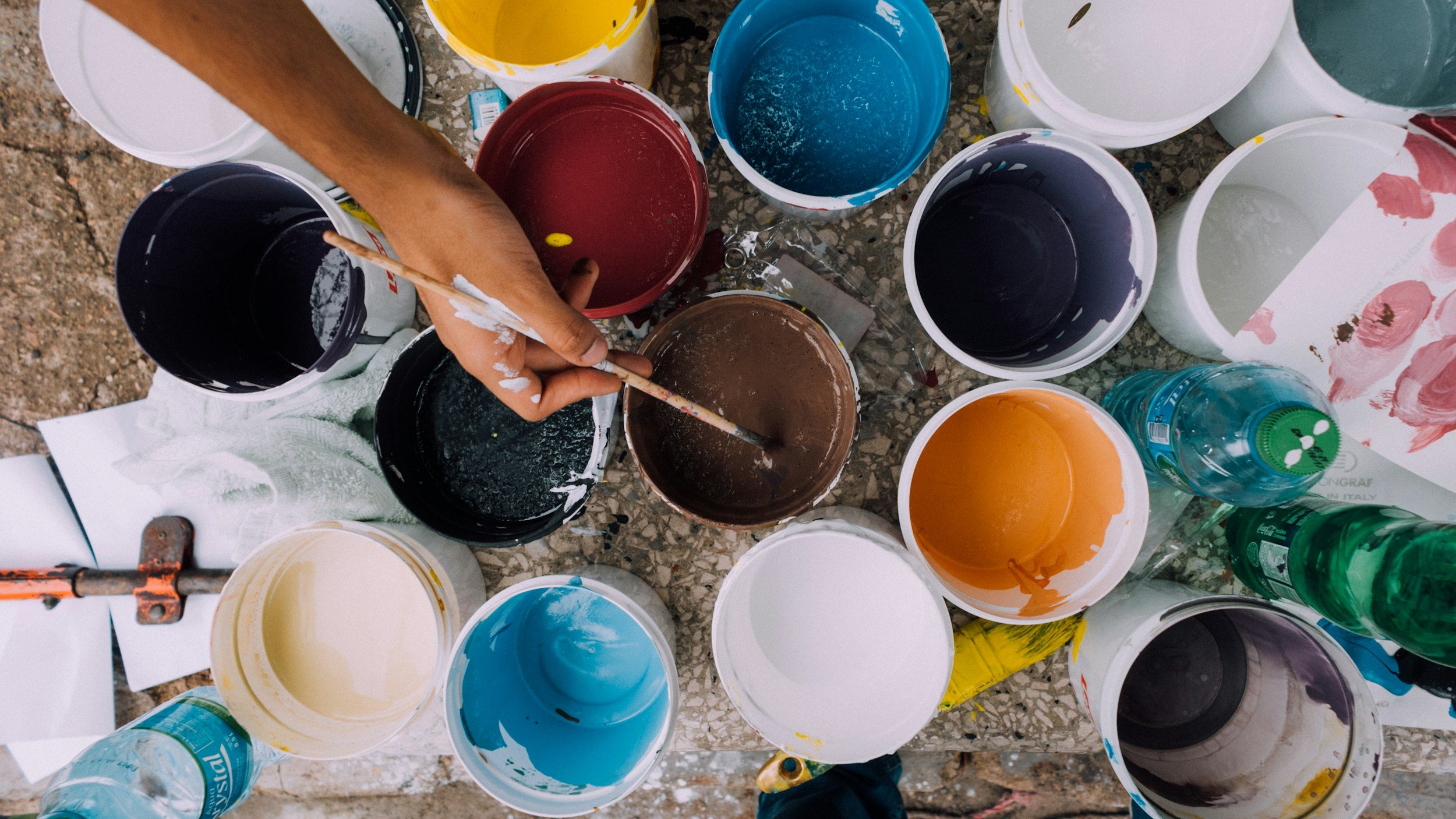
As both a designer and an artist, I often think about a paint palette. No artist reaches for a blank canvas hoping every tube of paint is the same color. Each color changes the ones around it. A deep blue feels different beside a warm orange. A quiet gray allows brighter colors to shine. The beauty of a painting isn't found in any single color. It's created through their interaction.
I sometimes wonder if conversations work the same way.
Most organizations already have remarkable people with different experiences, disciplines, and perspectives. The question isn't whether the colors exist. The question is whether our conversations allow those colors to influence one another. Too often, we move quickly toward answers. We explain. We evaluate. We defend. We solve.
Those instincts usually come from a good place. We want to help.
But what if understanding grows differently?
Amy Edmondson's research on psychological safety suggests that people are more likely to ask questions, acknowledge uncertainty, and learn together when they feel safe doing so. Those behaviors don't simply improve relationships. They expand what a group is able to understand together.
Perhaps thinking together isn't about agreeing. Perhaps it's about becoming curious long enough for different perspectives to change our own. Maybe the goal of a meeting isn't simply to leave with a decision. Maybe it's to leave with a deeper understanding than anyone brought into the room.
As I reflect on my own work, I find myself asking fewer questions about who was right.
I'm becoming much more interested in questions like:
What assumptions are we making?
What perspective haven't we heard yet?
What might we all be missing?
What would change if we became curious before becoming certain?
Every artist knows that a painting isn't created by finding the "best" color. It's created by allowing each color to shape the whole. So I leave you with the question I've been carrying: If the people around your table are already the palette, what would help you think together before deciding together?
References
Heidi Gardner, When Senior Managers Won't Collaborate (Harvard Business Review)
Amy Edmondson, Psychological Safety and Learning Behavior in Work Teams
J. Richard Hackman, Leading Teams